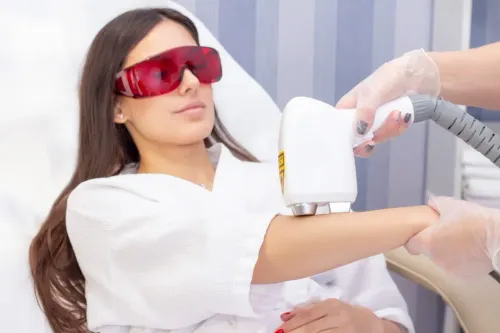
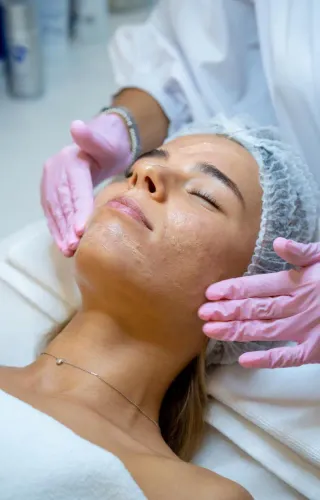
Acne may settle over time, but the scars it leaves behind can continue to affect skin texture long after active breakouts have stopped. Depressed scars, enlarged-looking pores, uneven texture, and areas of damaged skin can become especially noticeable under bright or directional lighting.
For suitable patients, fractional CO2 laser for acne scars is one dermatological option used to improve skin texture by stimulating controlled skin renewal.
For people seeking professional acne scar care in Delhi, understanding how fractional CO2 laser works, which scars may respond, and what recovery involves can make treatment decisions more realistic.
How Fractional CO2 Laser Works
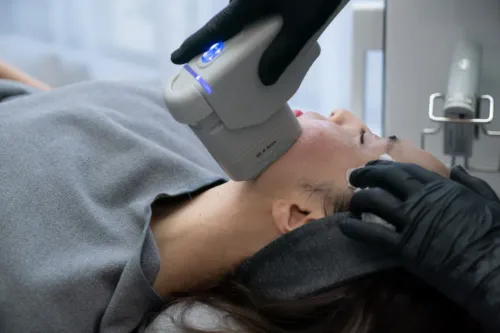
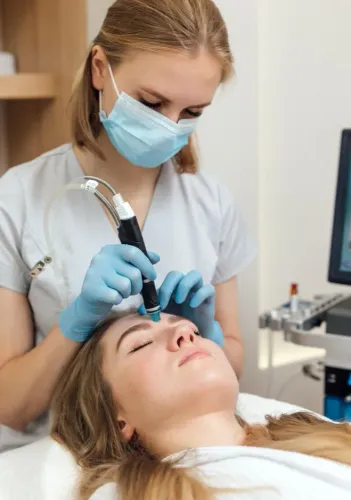
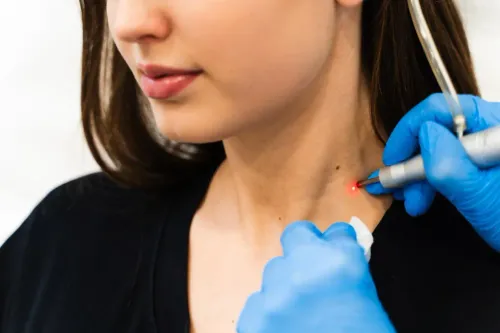
A fractional CO2 laser delivers controlled columns of laser energy into selected areas of the skin. Instead of treating the entire surface uniformly, fractional technology creates microscopic treatment zones while leaving surrounding tissue available to support healing.
The controlled thermal effect can stimulate:
- Collagen remodelling
- Skin renewal
- Gradual textural improvement
- Softening of selected depressed scars
- Improvement in overall surface irregularity
Results develop progressively because collagen restructuring takes time.
Which Acne Scars May Be Treated?
Not every acne scar looks or behaves the same way.
Common scar patterns include rolling scars, boxcar scars, ice-pick scars, post-acne pigmentation, and combinations of several scar types.
Fractional CO2 laser may be considered for selected atrophic or depressed acne scars, but treatment needs to be matched to scar depth and morphology.
Deep ice-pick scars, tethered scars, or complex scar patterns may require a different technique or a combination approach rather than laser treatment alone.
This is why acne scar assessment should come before choosing a procedure.
Why Skin Type Matters
Indian skin tones require thoughtful laser planning because post-inflammatory pigmentation can occur after procedures that create inflammation.
A dermatologist may consider:
- Natural skin tone
- Current pigmentation
- History of tanning
- Previous pigmentation after procedures
- Active acne
- Scar type
- Current skincare products
- Previous scar treatments
Patients should also disclose medicines and any history of abnormal scarring or delayed healing.
What Happens During Recovery?
Fractional CO2 treatment is not generally a zero-downtime facial procedure.
Depending on treatment intensity, patients may experience redness, warmth, swelling, dryness, crusting, or temporary darkening while the skin heals.
During this period, skincare instructions become particularly important.
Patients may be advised to use gentle cleansing, appropriate moisturisation, and strict sun protection while avoiding unnecessary exfoliation or irritating products.
People living or working across Delhi NCR should consider sun exposure, outdoor commuting, pollution, and work commitments when scheduling treatment.
How Many Sessions Are Needed?
There is no universal session count for acne scars.
The number of sessions depends on scar severity, scar pattern, treatment intensity, skin response, downtime tolerance, and the degree of improvement being sought.
Acne scars also cannot always be completely erased. A more appropriate goal is usually visible improvement in texture and scar appearance.
Active Acne Should Not Be Ignored
Treating scars while significant acne is continuing may lead to new scars developing.
For some patients, controlling active acne becomes the first priority. Scar procedures can then be planned once the dermatologist considers the skin sufficiently stable.
This sequencing can be especially important for teenagers and young adults who are still experiencing recurring inflammatory acne.
A Personalised Assessment Comes First
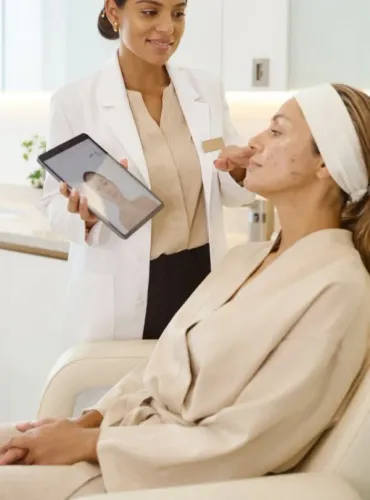
At a dermatology consultation, scar depth, distribution, skin tone, pigmentation tendency, and active acne can be assessed before a procedure is recommended.
Dr Manisha Chopra Dermatologist in Greater Kailash II evaluates skin concerns within the wider context of dermatological care rather than assuming every acne scar needs the same laser protocol.
Fractional CO2 laser can be a useful option for appropriately selected acne scars, but successful treatment begins with identifying the scar correctly. Understanding what the laser can realistically improve, how much recovery to expect, and whether combination treatment is appropriate helps patients approach acne scar treatment with clearer expectations.
Keywords