Small skin growths around the neck, underarms, eyelids, or other areas are often assumed to be skin tags. Many are harmless, but appearance alone is not always enough for a person to identify a lesion correctly.
That is why professional assessment can be useful before tag removal.
The aim is not merely to remove a visible growth. The first step is establishing what the growth actually is.
What Is a Skin Tag?
Skin tags are generally soft, benign growths that may occur in areas where skin folds or friction is common.
They can be flesh-coloured or slightly darker than the surrounding skin and may hang from a small stalk.
Some people leave them untreated because they cause no symptoms. Others seek removal because tags catch on jewellery or clothing, become irritated, or create a cosmetic concern.
Why Self-Diagnosis Can Be Unreliable
Warts, moles, seborrhoeic keratoses, and other lesions can sometimes be described casually as tags.
Removing an unidentified lesion at home using acids, cutting instruments, tying methods, or unverified products may lead to bleeding, burns, infection, scarring, or delayed diagnosis.
A dermatologist can examine the growth before deciding whether straightforward removal is appropriate.
When Should a Growth Be Assessed?
Professional evaluation is particularly sensible if a lesion:
- Has changed noticeably
- Bleeds without obvious trauma
- Develops irregular colour
- Becomes persistently painful
- Grows rapidly
- Looks different from nearby lesions
- Has an uncertain diagnosis
These features do not automatically mean that a lesion is serious, but they are reasons not to treat it casually at home.
How Are Skin Tags Removed?
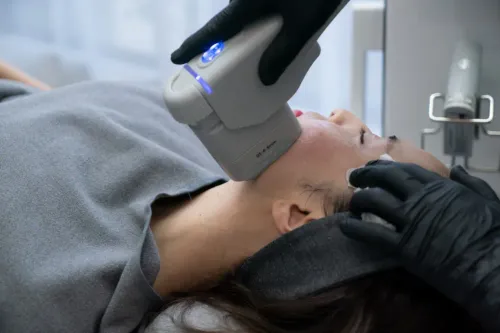
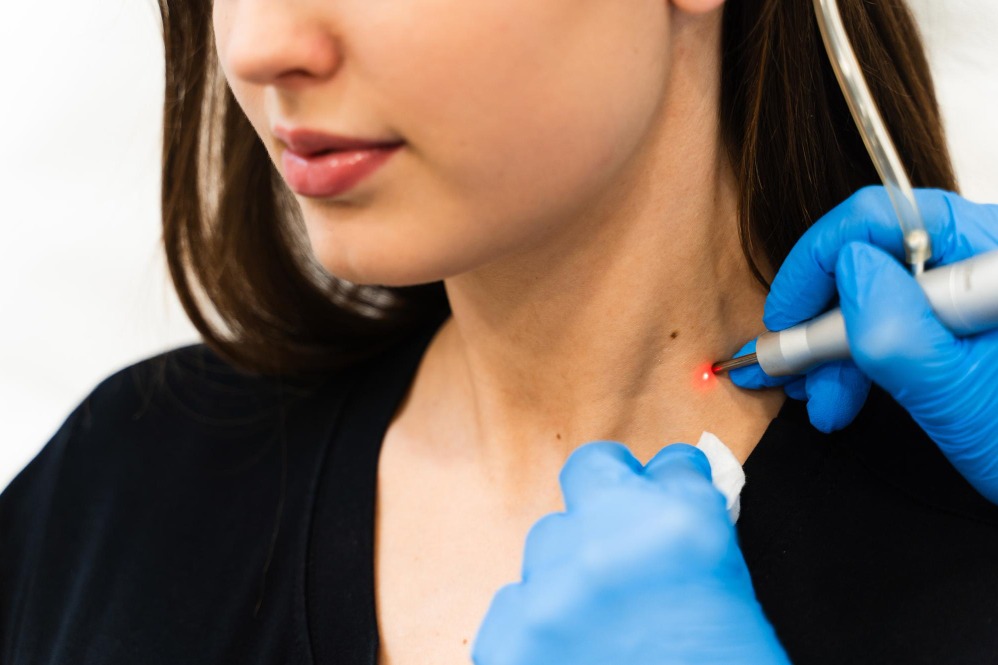
Several techniques may be used in clinical practice depending on the size, number, location, and nature of the growth.
The dermatologist selects an appropriate method after examination.
Patients should ask whether local anaesthesia is needed, what wound care will be required, how long healing generally takes, and whether temporary pigmentation is possible.
What About Multiple Tags?
Some people develop many tags rather than one isolated lesion.
In these cases, assessment may include discussion of the pattern and any relevant clinical context rather than simply removing each visible growth without review.
Not every person with multiple skin tags has an underlying medical problem, so assumptions should be avoided.
Can Tags Return?
Removing a particular skin tag removes that lesion, but it does not necessarily prevent other tags from developing elsewhere later.
Patients should therefore be cautious about claims suggesting that a single removal session permanently prevents all future skin tags.
What Should Happen Before a Procedure?
A sensible pre-removal consultation should establish:
- Whether the lesion appears consistent with a skin tag
- Whether removal is medically or cosmetically appropriate
- Which technique is suitable
- What aftercare is needed
- What healing changes may occur
For patients in Delhi NCR, especially those with busy schedules, understanding whether there will be a visible healing mark can also help with procedure timing.
Dr Manisha Chopra Dermatologist in Greater Kailash II evaluates skin growths as part of dermatological care before recommending suitable management.
Skin tag removal is often straightforward when the diagnosis is clear, but the simplicity of the procedure should not make diagnosis seem unimportant. If you are unsure whether a growth is actually a tag, have it examined before attempting to remove it. Correct identification is the safest starting point for any lesion-removal decision.
Keywords